

[ad_1]
As the country doubles down on coal exports, local communities—like those in Baltimore and Ennore—will bear the environmental burden.
David Jones and Panner Selvam don’t have much in common. The two are separated by thousands of miles of ocean. One lives in Baltimore, Maryland, the other in a small town north of Chennai, India. One is a highway maintenance and traffic operator, the other a fisherman.
But Jones and Panner both pay the price for a single trade route of coal that connects the mines of central Appalachia in the United States with heavy industrial factories across India.
This trade route has grown dramatically over the past five years, weaving American coal companies and India’s power, steel, and cement sectors into a web of fossil fuel dependency. Facing two decades of declining domestic coal use, America’s largest coal companies have turned outward, increasingly sending their product abroad, largely to India. Nearly a quarter of all the coal America shipped overseas last year, the largest share by far, was purchased by Indian companies.
In the United States, coal exports recently reached a six-year high, as a quarter of all coal mined domestically now ends up overseas. When President Trump said to the United Nations in September that the United States is “ready to provide any country with abundant, affordable energy supplies,” this seems to be just the transition he had in mind.
But the supply route has a heavy cost, threatening global decarbonization efforts and sacrificing communities on both ends of the trade corridor. At its most personal, exporting coal from the US to India burdens people like Panner and Jones with health problems, unstable livelihoods, and an uncertain future for their children. “My life,” Jones said, “is going to be cut short because of this.”
Jones has lived with coal for years. His neighborhood, Curtis Bay, is home to an export terminal operated by national rail giant CSX. Piles of coal at the terminal loom over rowhouses mere hundreds of feet away.
Wind kicks up dust from the piles and blows it into the community, settling on stoops and playground slides. A peer-reviewed Johns Hopkins study found that this dust contributes to air pollution levels in Curtis Bay. Residents exhibit high rates of asthma and chronic lower respiratory disease, afflictions often linked to coal dust exposure. Chloe Ahmann, an anthropologist who used to be an elementary-school teacher in Curtis Bay, recalls having classes “full of students with asthma, who struggled to fully enjoy their recess.” The students, she recalled, talked about “the thickness and sticky qualities of air.”
Sometimes the terminal’s impacts are more dramatic. In December 2021, an explosion sent a cloud of dust over the area, shattering windows and blanketing homes in a 12-block radius with dust. “There was just dust everywhere—more than normal,” Jones recalled.
Current Issue

“Everyone who lives or works in Curtis Bay is an unpaid employee of CSX,” Greg Sawtell, a South Baltimore environmental justice organizer, told Maryland lawmakers. “Folks have to spend their time and money cleaning off their homes, dealing with increased medical bills. Zero compensation.”
Baltimore has exported coal for more than a century. Its deep port and proximity to Appalachian mines make it an ideal location for US producers. Today the city hosts the second-largest coal export hub in the country. Nearly 30 percent of American coal exports move through Baltimore’s two terminals, operated by CSX and Core Natural Resources.
These terminals have become ground zero for a major shift in the coal industry. Across the United States, coal demand has collapsed as utilities replace coal plants with cheaper natural gas and renewable options. Coal use has dropped by half since 2008 and is projected to approach zero within two decades. And the recent boom in energy demand due to data centers is not expected to change the long-term trend. “The structural decline is still in place,” said Jonathan Church, an analyst at the US Energy Information Administration.
As domestic demand ramps down, coal companies have turned to the international market to find buyers overseas, increasing investments in export infrastructure. Core, which operates the second Baltimore terminal, was formed this year out of a merger between Consol Energy and Arch Resources, with an explicit goal to expand export capacity; before the merger, an Arch Resources vice president announced, “We’re ready to go 100 percent exports.”
The Baltimore terminals have flourished in this environment. Combined, their exports more than doubled over the last decade. “There’s no end in sight,” said Jennifer Holland, general manager of Core’s Baltimore terminal.
Residents fear that this expansion has increased pollution. Since the 2021 explosion, they have lobbied and protested to try to shut the terminal down. But after several defeats, Jones is not optimistic. “It’s one of those things that’s just never going to turn around,” he said. “They just don’t care.”
Panner Selvam lives on the receiving end of this supply route in Ennore, a collection of fishing villages in northern Chennai.
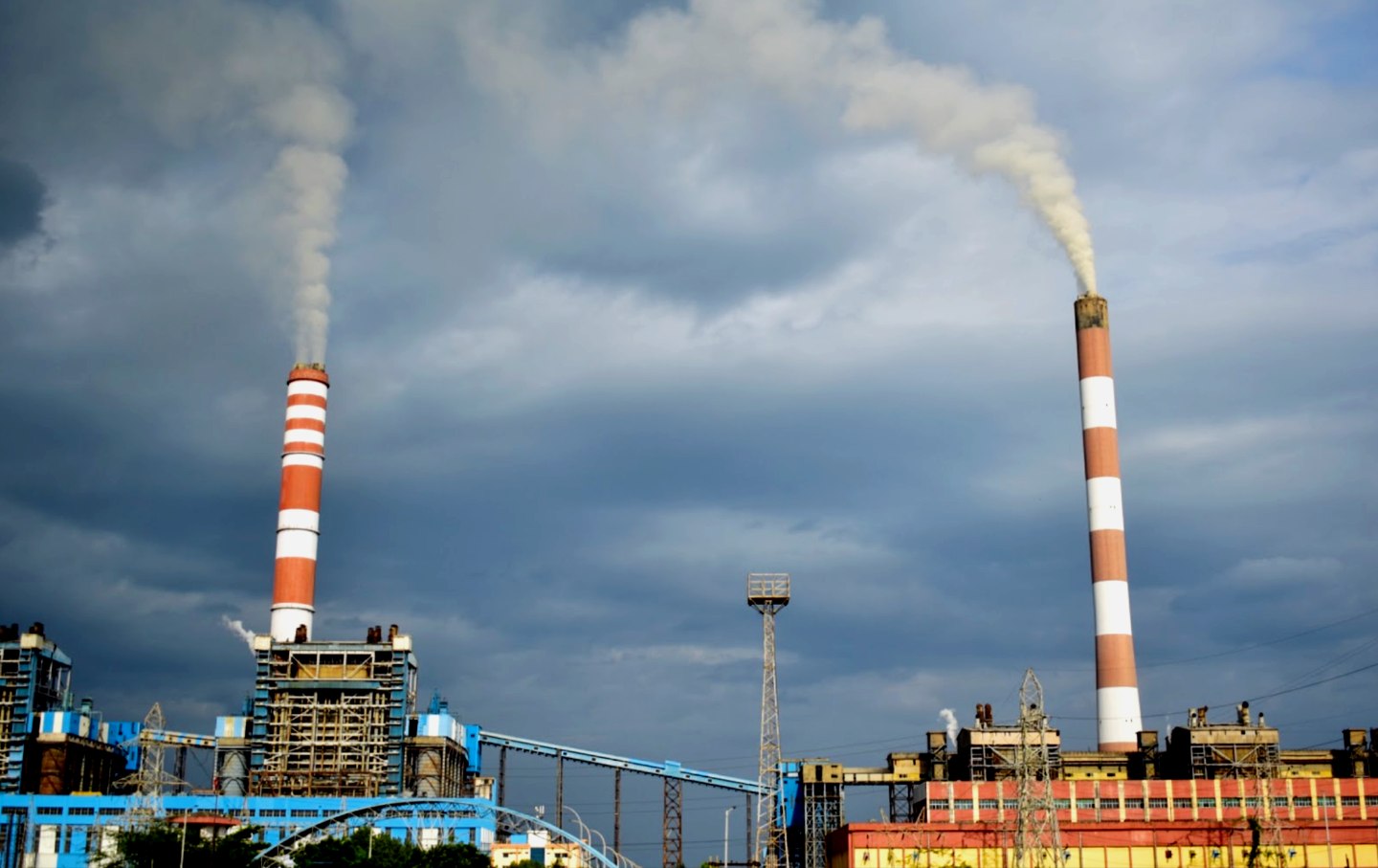
Although India is the world’s second-largest coal producer, it still imports a substantial share of its coal, and the nearby coal infrastructure has transformed Panner’s life—mostly for the worse. To Ennore’s north is the sprawling Kamarajar Port, one of the dozen primary Indian ports that take in US coal. Blue conveyor belts from the port bring coal to three state-run power plants in a 2.5-mile radius, whose smokestacks launch yellowish clouds into the air.
Panner’s village was displaced to its current location when the state government bought land to build the first coal plant in the late 1980s. Since then, that plant and the two that followed have released dangerous pollutants into Ennore’s air and water. Breathing problems and skin allergies have become nearly ubiquitous among villagers in the surrounding area, including for Panner, who told me he contracted asthma since the resettlement. “The place has become unfit for somebody to live,” said Vaishnavi P., a Chennai-based labor activist and journalist.
In Ennore, the power plants clog local waterways with toxic fly ash and release hot wastewater that destroys fish breeding grounds, according to local activist groups. Kamarajar Port, meanwhile, dredges shrimp spawning areas and fills fish-populated channels with the dredged material to expand its footprint. As a result, fish populations have been decimated, and Ennore’s fishermen now struggle to make a living. “Fishing is disappearing,” Panner said, and he expects that he will not be able to pass down his profession to his children.
In India, domestic coal reserves in the north are often low-quality and distant from demand centers. As a result, power plants and steel and cement factories have increasingly relied on imports. Because transporting coal across the globe is costly, most of the imports come from Indonesia, Australia, and Russia, whereas only about 11 percent comes from the United States, which functions as a “swing supplier,” according to Church, shipping coal only when international prices rise high enough for the long transit to make economic sense.
But as India expands its industrial base, coal imports in the cement and steel sectors are expected to grow further. Steel-sector imports alone could reach 160 million tons, according to India’s Steel Secretary. The US Department of Commerce enthused that this trend “presents a significant, long-term opportunity for U.S. coal.”
Although the Indian government has announced plans to phase out imports by this year or next, with Prime Minister Narendra Modi describing reliance on imported coal as a “sin,” slow action has allowed US coal to continue arriving at major ports, including Kamarajar, where three more coal berths are under construction.
Popular
“swipe left below to view more authors”Swipe →
The resulting air and water pollution continues to violate legal limits, despite opposition from fisher communities and local activists, who have used emissions monitoring and mapping software to document harm to their wetlands and call for compensation. Their protests and lawsuits have, however, bogged down an 800 MW power plant expansion, as well as the expansion of a port just above Kamarajar.
Nityanand Jayaraman, a Chennai-based writer and social activist, believes that the struggle between industry and Ennore’s communities won’t end anytime soon. “There will be continued effort to hold these companies accountable. There will be continued effort to at least prevent further degradation,” he said. “And there will be continued effort to repair the existing damage.”
As the American coal industry focuses on exports, it is entering a volatile future in which its fate will be tied to geopolitical maneuvers and the whims of the global market. Profits from exports surged after the Russia-Ukraine war increased global demand. Today, however, they are “in the tank,” according to Church, causing trouble for exporting companies. This unpredictability offers no signs of relenting, and its long-term viability is dependent on the pace of global decarbonization.
But as long as port areas like Baltimore and Ennore continue to develop their trade infrastructure, their communities will continue to bear the burden of America’s gamble on exports.
To Nicole Fabricant, an anthropologist working on the campaign against CSX’s terminal, exporting coal to be burned somewhere else is a multilayered injustice. “It feels like violence on every layer: the violence of the climate crisis, the violence of having to breathe in coal,” she said. “To continue burning it or exporting it to industrializing nation states,” she added, “we’re complicit in that violence.”
More from The Nation

A conversation with the documentarians Rowan Wernham and Yasha Levine about their film Pistachio Wars, a look at how one family came to control much of the state’s water.
Trump’s attack on Venezuela illustrates fossil fuels’ many perils.
In Alaska, the last stronghold for wild salmon, Native tribes and conservationists are working to save the fish from both climate change and decades of corporate greed.
[ad_2]
